For almost twenty years, the Uniterra name was linked to Canadian international volunteering. Launched in 2003 by the Centre for International Studies and Cooperation (CECI) and World University Service of Canada (WUSC), the joint program sent thousands of Canadians to support partner organizations in Africa, Asia and Latin America. It ended in June 2020. Its alumni are many, and both organizations carry on the work, each on its own, through Global Affairs Canada’s Volunteer Cooperation Program (VCP).
One program, two organizations
CECI and WUSC had been sending volunteers for decades when, in 2003, they decided to join forces in a single, larger program. A case study of the partnership notes that it was hailed at the time as a major innovation in the development sector. It lasted sixteen years and was renewed several times, including in 2009 and 2014.
How Uniterra worked
- Targeted sectors. In each country, the program focused on one or two economic sectors and the partner organizations working in them.
- Assignments of different lengths. Placements ranged from two weeks to two years. They did not only go from Canada to partner countries: volunteers from the South also went to other countries of the South, or to Canada.
- Leave for Change. This stream let employees of partner universities and companies use their vacation for an assignment of a few weeks. It accounted for about 500 placements with some fifty employers.
- An annual forum, organized jointly, brought together partners, volunteers and development actors.
The final phase in numbers (2015-2020)
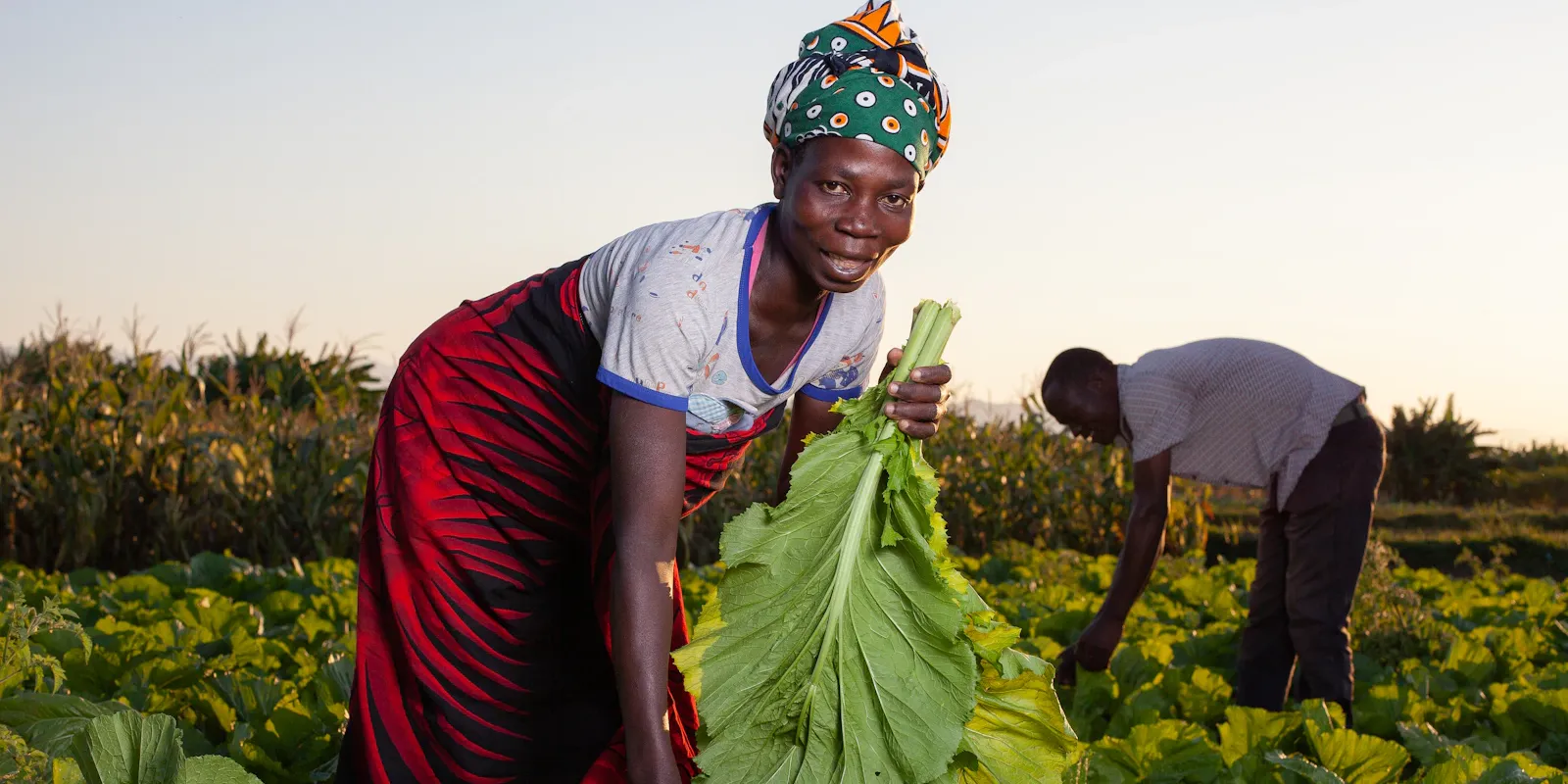
According to Global Affairs Canada’s project profile, Uniterra’s final phase had a budget of $73.9 million and planned about 2,500 volunteer assignments. It covered countries including Senegal, Burkina Faso, Nepal, Vietnam, Ghana, Malawi, Haiti, Bolivia, Peru, Guatemala, Sri Lanka, Mali, Tanzania and Mongolia. Almost half of the budget went to agricultural production, the rest to small and medium-sized enterprises and business support services, with one goal: markets that work better for women and youth.
A 2018 evaluation of the VCP, cited in the case study, counted about 3,000 volunteers and 260 partner organizations in 14 countries.
Since 2020: two separate projects
For 2020-2027, Global Affairs Canada capped the contribution to each organization at $50 million. CECI and WUSC then submitted separate proposals, co-managed Uniterra’s final year and prepared the transition.
- CECI’s project ($49,999,436, until December 31, 2027) plans 1,130 assignments focused on women’s economic empowerment. By March 2024, 781 assignments had been mobilized with 89 partners. The main countries are Senegal, Bolivia, Benin, Rwanda and Guatemala.
- WUSC’s project, IGNI+E ($49,999,621, until December 31, 2027), announces more than a thousand volunteer opportunities over six years with 70 organizations in Africa and Asia. WUSC also continues Leave for Change.
Both projects are part of a VCP worth nearly $418 million over seven years, funding 13 projects led by 15 Canadian organizations. To find out what is planned after 2027, read our article on the future of the Volunteer Cooperation Program.
Were you a Uniterra volunteer?
We would like to hear from you. Our Volunteer Voices series collects stories from former and current VCP and Uniterra volunteers: leaving, the people you met, the hard times, coming home. Share your story.
To go again today, see the profiles of CECI and WUSC, our verified opportunities and our guide to volunteering abroad.
Sources
- Global Affairs Canada – Uniterra, CECI and WUSC volunteer sending 2015-2020
- Global Affairs Canada – CECI volunteer cooperation 2020-2028
- Global Affairs Canada – WUSC volunteer cooperation 2020-2028
- Case study of the CECI-WUSC partnership (Anne Delorme) (PDF)
- CECI – Renewed support for the Volunteer Cooperation Program
- WUSC – The IGNI+E program
- WUSC – Leave for Change
Last checked: November 29, 2026.